Six months after the Supreme Court dismantled what was left of the Voting Rights Act, Black voters in the South turned out in numbers the Court’s majority did not predict. The surge was biggest in the places the law once watched most closely.
That is the finding of new Brennan Center for Justice analysis of the Nov. 3 midterms. Counties formerly covered by the Act’s preclearance rule, which forced states with a record of discrimination to clear voting changes with Washington until the Court ended it in 2013, saw turnout rise by as much as 10 percentage points over 2022. That is well above the gains in other majority-minority counties. Overall, the midterms drew the second-highest turnout for a midterm since 1914, behind only 2018.
Georgia’s preliminary voter file shows what that looked like. Among people who voted in 2024, 29% of white voters sat out this year’s midterm, compared with 24% of Black voters. And 13% of Black voters who cast a ballot were new since 2024, against 7% of white voters. The Brennan Center says the racial turnout gap in Georgia fell to “the lowest point of any midterm election in the past 20 years.”
The authors tie the pattern to anger over Louisiana v. Callais, the April ruling that effectively ended Section 2 protections against maps that dilute Black votes. They stop short of proving cause. NBC News reported that Black turnout in South Carolina looked “more similar to a presidential election year than a midterm year,” which helped carry Democratic Sen.-elect Annie Andrews to victory.
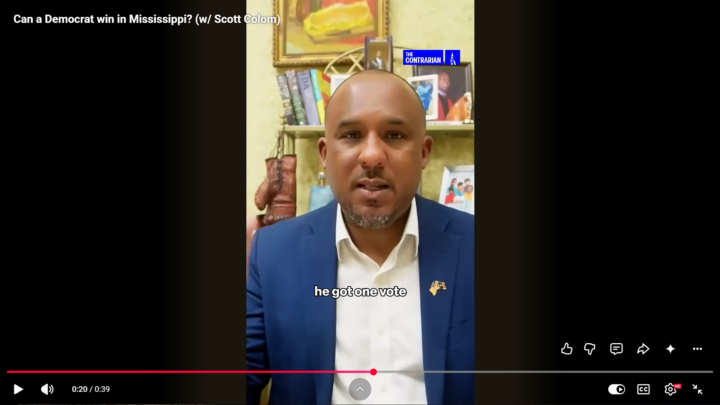
The clearest result is in Mississippi. The state’s secretary of state certified Scott Colom’s win over Sen. Cindy Hyde-Smith last week: 479,404 votes to 471,817, a margin of 7,587. As the AP reported, Colom is the first Black senator from Mississippi since Reconstruction. In 1964, fewer than 10% of Black Mississippians were registered to vote. After four years of federal enforcement under the Act, registration reached nearly 60%, Brennan Center researcher Kevin T. Morris wrote in TIME.
The Republicans who cheered the Court’s ruling will say the turnout proves the Act was no longer needed. It proves the opposite. Black voters in the old preclearance states did the work the law once did for them, against maps redrawn to shrink their power, and the Georgia figures are still preliminary. A turnout surge fueled by anger is not a protection. It cannot be counted on every cycle.
Morris urges Congress to pass “a new Voting Rights Act as bold as the one that arose out of the Civil Rights Movement.” Democrats take control of the House in January with the Senate flipped as well, and Black voters just showed them where the votes came from.
Have your say