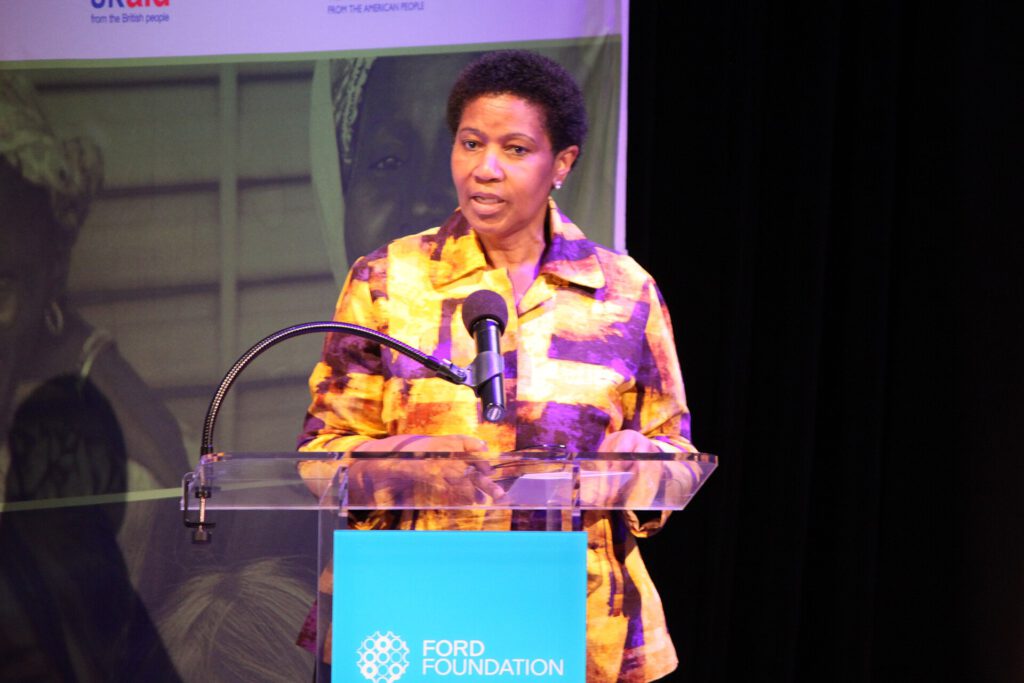
Phumzile Mlambo-Ngcuka, the first woman to serve as South Africa’s deputy president and later the head of UN Women, died Friday at 71. She had undergone a medical procedure about two weeks earlier and died of complications, according to the government’s announcement.
President Cyril Ramaphosa, on a working visit to Silicon Valley, announced her death. “She truly flew the flag of women, not only women of South Africa and Africa, but women of the world,” he said.
For Black women watching from Johannesburg, Atlanta or Toronto, her career is a record of doors opened in rooms that were built to keep them out. In 1983 she helped found the Natal Organisation of Women, under a state that denied Black South Africans the vote. She was elected to Parliament in 1994, then served as deputy minister of trade and industry from 1996 to 1999.
In 2005 she became deputy president under Thabo Mbeki, the highest office any woman in South Africa had held. She oversaw the government’s Accelerated and Shared Growth Initiative for South Africa, its plan to speed up growth and cut poverty.
From 2013 to 2021 she was UN Under-Secretary-General and executive director of UN Women, the body charged with advancing gender equality worldwide. UN Secretary-General Antonio Guterres called her “a lifelong champion of the rights and empowerment of women and girls.” He said she believed “gender equality is not a favour to be granted but a right to be claimed.” UN Deputy Secretary-General Amina Mohammed pointed to her advocacy in Afghanistan, the Democratic Republic of Congo and Nigeria.
At home, the African National Congress called her “a distinguished leader.” The Inkatha Freedom Party said her work “cemented her contribution to the global struggle for gender equality.” She later founded the Umlambo Foundation to support teachers and was named chancellor of the University of Johannesburg in 2022.
She held offices that had never had a woman in them, then used the last of them to press governments to treat equality as a right, not a favour. That is the part of her record the tributes keep returning to.
She is survived by her husband, Bulelani Ngcuka, and the Ngcuka and Mlambo families. A state burial is expected at the family home in Middledrift in the Eastern Cape.
Have your say