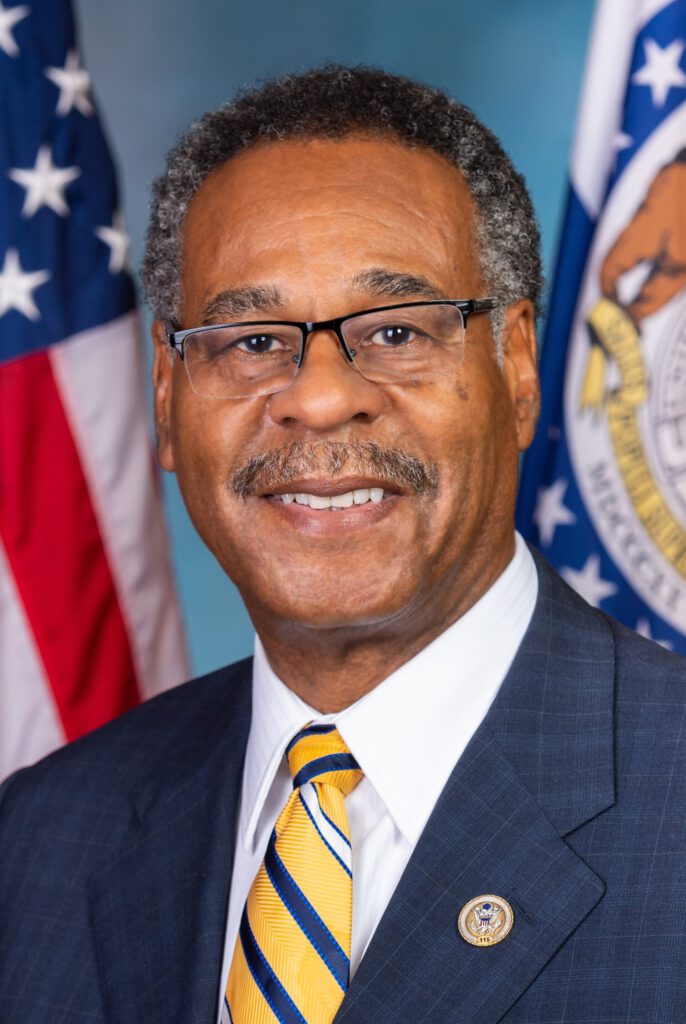
Missouri Republicans cut Kansas City into three pieces so that Rep. Emanuel Cleaver, the Black Democrat who has represented it in Congress for two decades, would lose his seat. On Tuesday, voters tore the map up. Proposition A failed 62% to 38%, according to the Associated Press, and Cleaver won re-election.
The map was drawn in a September special session at President Donald Trump’s urging. It was built to turn a Kansas City seat into a Republican-leaning one and give the party a 7-1 edge in the state’s eight districts. Splitting a city this way is a familiar technique: it takes a concentrated bloc of Democratic and Black voters and spreads it thin across districts where it can no longer decide anything.
The vote nearly never happened. A group called People Not Politicians gathered hundreds of thousands of signatures to force a referendum. Secretary of State Denny Hoskins, a Republican, waited until the legal deadline, Aug. 4, to reject the petition, arguing that congressional maps cannot be put to a referendum. The Missouri Supreme Court unanimously disagreed in September, put the question on the ballot and sent the state back to its 2022 districts for this election.
In Jackson County, which includes most of Kansas City, 71% voted against the map, as Bolts reported.
“This was just partisan politics, with an extra dose of racism,” said Nimrod Chapel, president of the Missouri NAACP State Conference. The group’s executive director, Richard von Glahn, put the result in terms of the signatures behind it: “This has been a long time coming, but this is what voters signaled to politicians when they flooded the Capitol.”
Republicans kept their majorities in the legislature, and the margin does not end the fight. But voters also approved Amendment 6, with roughly 60% support. It requires an 80% vote in both the Missouri House and Senate to change or repeal a law that citizens passed or revived by referendum. Even then, the change must go back to voters. Legal experts have said that makes another mid-decade redraw extraordinarily difficult, and organizers could launch another veto if one is tried.
What matters for Black Missourians is how much it took. The map cleared the legislature and the secretary of state. It was stopped by the people it was drawn against, who had to collect signatures, win in court and turn out to be counted at all.
The lesson for the next legislature is plain. A map aimed at a Black congressman’s seat lost by 24 points, and the state now has a law that makes trying again very expensive.

Have your say