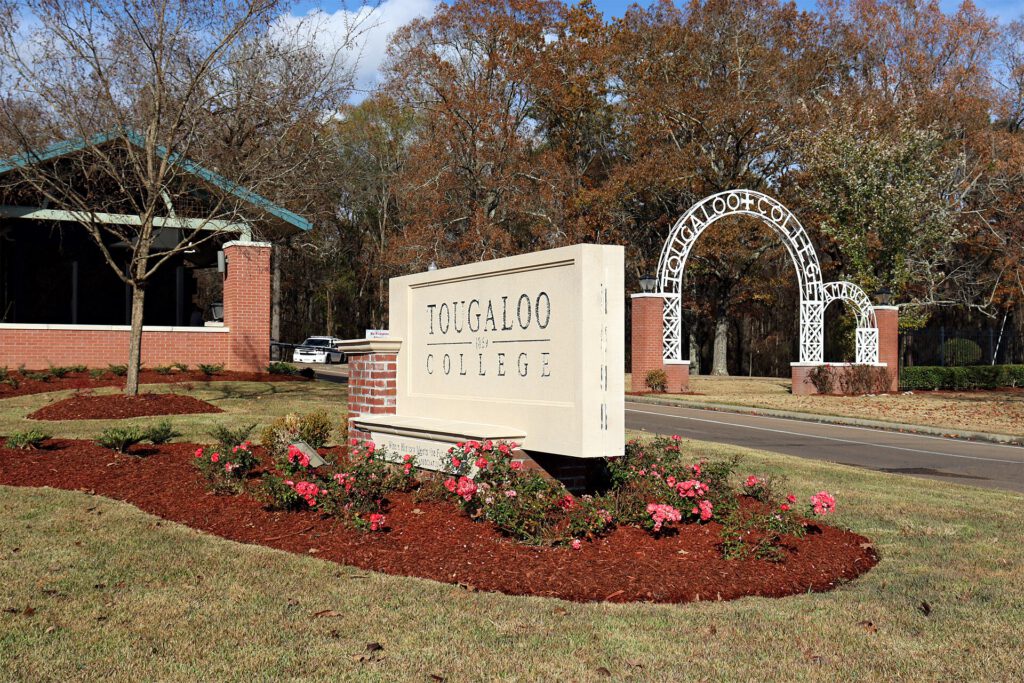
Scott Colom won Mississippi’s U.S. Senate seat, the first Black senator the state has sent since Reconstruction. Hinds County still threw out 1,609 of the 2,426 affidavit ballots its voters cast, a rejection rate of about 66%. Some of those ballots came from students at Tougaloo College and Jackson State University, two historically Black schools in a Black-majority county.
Statewide, about 76% of affidavit ballots were accepted, Secretary of State Michael Watson’s office reported. Hinds accepted 34%. An affidavit ballot is what a voter gets when poll workers cannot confirm their registration or precinct on the spot. It counts only if election officials later verify the voter was eligible.
At Jackson State, 212 student ballots were rejected, according to figures reported by WLOX. In 188 cases the student was not registered. Eighteen voted at the wrong precinct, and six were registered in another county.
Election officials point to students and the groups that registered them. Hinds County Election Commissioner Felicia McClinton said registration drives may have turned in applications after the Oct. 5 deadline the circuit clerk set. Commissioner Kidada Brown told Democracy Docket: “we had a lot of people that voted in the wrong precinct.”
Students describe a system built to lose them. Mississippi has no online voter registration, so every application is filled out by hand. “Students who want to register have to write everything by hand, so when we think about that, we think about how things are spelled correctly,” Aznii Welchlin, Tougaloo’s student government president, told Capital B, which first reported the Tougaloo accounts.
Tougaloo’s campus straddles Hinds and Madison counties, two of the state’s largest, and Capital B reported that wrong-county registrations and conflicting instructions sent students in circles. It also reported that some student IDs were turned away even though state law allows them. Muarib Abdul-Tawwab, a Tougaloo student, said he had told out-of-state classmates: “If you don’t think your vote matters, it does matter. But I say your vote matters more in Mississippi than it does where you’re from.”
Jakari Holland, a Jackson State senior who worked on registration drives, put the cost plainly: “you spend so much time registering students to vote, making sure that you’re actually educating them.”
The officials’ explanation may be right as far as it goes. A late application is late. But a deadline that students could miss without knowing, in a state that makes them register on paper, is a choice the state made. Mississippi chose to keep registration hard, and the rejected ballots fell hardest on Black students at Black colleges, in a county where the vote decided who would represent them.
Colom’s margin of 4,645 votes means these ballots did not change the winner. They would have mattered in a closer race, and Mississippi has no recount. Students are now working with the Mississippi Access Project to push for online registration and same-day registration. Only the legislature can grant either.

Have your say