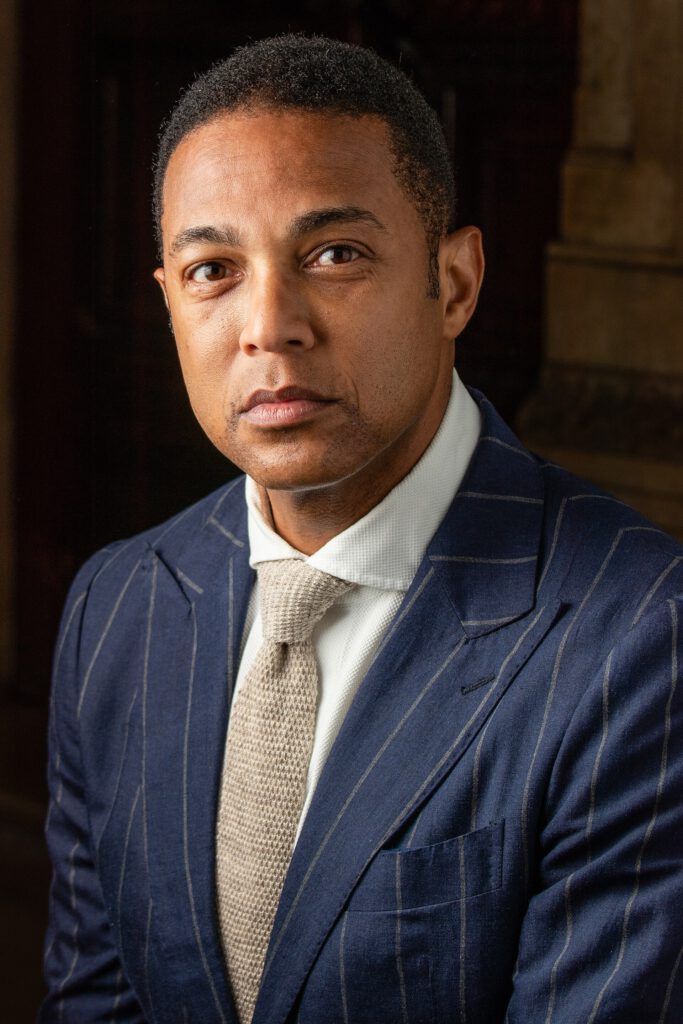
Georgia Fort turned on a livestream at a protest in a St. Paul church in January. Ten months later, she is one of two Black journalists the federal government is prosecuting for it, and on Monday her lawyers stood in a packed courtroom and asked a judge to end the case.
Fort, who founded the Center for Broadcast Journalism to train reporters of color, and Don Lemon, the former CNN anchor, are among 39 defendants charged over the Jan. 18 protest at Cities Church, where a U.S. Immigration and Customs Enforcement field director serves as a pastor. They face two felony counts under the Freedom of Access to Clinic Entrances (FACE) Act: conspiracy against religious freedom at a place of worship, and interfering with the exercise of religious freedom. Three other journalists, Michael Beute, Jerome Richardson and Shane Bollman, are charged with them.
The case almost did not exist. In January, U.S. Magistrate Judge Douglas Micko declined to approve charges against Lemon. Prosecutors went to a grand jury, which indicted Lemon and Fort in February. In August, U.S. District Judge Laura Provinzino ordered prosecutors to hand over grand jury materials after Lemon’s lawyers wrote that there was “substantial evidence of grand-jury irregularities.”
Micko heard the motions to dismiss on Monday. Isabella Salomão Nascimento, who represents Fort, told him: “This is what a vindictive prosecution looks like.” Abbe Lowell, for Lemon, said the government’s theory “would make virtually all important journalism a crime.” Matthew Ebert, another defense lawyer, said: “The government has pleaded themselves out of court.”
Prosecutors said the journalists were part of a coordinated action. “It was joint mob action,” said Rob Keenan, one of the government’s lawyers. Neville Hedley, another, said: “They were not singled out because they were journalists.” The government also argued that churches take in out-of-state donations, which it says ties worship to interstate commerce and so to the FACE Act. Micko suggested that treating religious activity as commercial activity would “fundamentally misunderstand religion in America today.”
The defense also argues that the church section of the FACE Act, a 1994 law best known for protecting abortion clinics, is unconstitutional because worship is not interstate commerce the way a clinic’s patients and supplies are.
Micko did not rule. He will send a recommendation to Provinzino, who decides.
The government will say this is about a church, not the press. But the people in the dock were holding cameras and phones, a magistrate judge refused to sign the first complaint, and the case went forward only after prosecutors took it to a grand jury. Lemon has been the target of public criticism from President Donald Trump, which his lawyers cite as the root of the case.
For Black readers the stake is plain. Lemon has a legal team that includes one of Washington’s best-known defense lawyers. Fort runs a training pipeline for journalists of color, and many of the outlets that cover protests for Black communities have no such lawyers behind them. If a livestream can become a felony conspiracy, the next reporter charged will not have Abbe Lowell. Provinzino should throw the case out.
Have your say