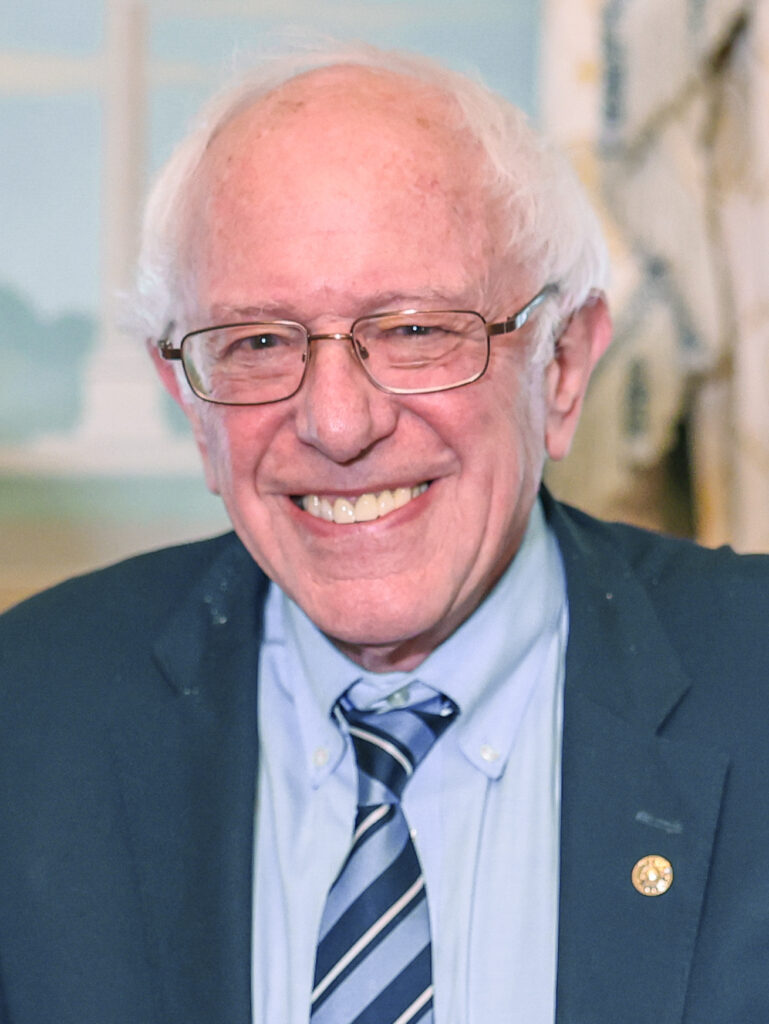
Bernie Sanders says that when Democrats take the Senate in January, he will use the budget process to move the country toward Medicare for All, and dare President Donald Trump to veto it. Working-age Black adults are uninsured at a higher rate than white adults, so the stakes in that fight fall on them first.
The CDC’s National Center for Health Statistics reported in May that 11.3% of Black adults ages 18 to 64 had no health insurance in 2025. For white adults the figure was 8.5%. Black adults have made real gains (the rate was 14.1% in 2021), but those gains rested on Medicaid expansion and enhanced Affordable Care Act subsidies, and both are under attack. The same data show adults in states that never expanded Medicaid were uninsured at 18.1%, twice the 9.0% rate in expansion states.
KFF, the health policy research group, projects that Medicaid and ACA cuts in the 2025 reconciliation law, together with the expiration of the enhanced premium tax credits, will push the number of uninsured Americans up by more than 14 million by 2034. It warns that could widen racial gaps in coverage.
Sanders, who is expected to chair the Senate Health, Education, Labor and Pensions Committee, laid out a four-year transition on Nov. 18. In the first year, Medicare eligibility would drop from 65 to 55, with dental, vision and hearing coverage added and health care guaranteed for children through age 18. The age would fall to 45 in year two and 35 in year three. In year four, everyone would be covered. Democrats would hold a 56-44 Senate majority, and Sanders plans to use budget reconciliation, which avoids the 60-vote filibuster.
“This is no longer a utopian vision. This is where the American people are,” Sanders said. On the pace, he said: “Transforming a system which is 18% of the GDP of America, you don’t do that overnight.”
The obstacles are real. Any bill needs Trump’s signature, and the Congressional Budget Office has estimated that even lowering the Medicare age to 60 would add $155 billion to deficits from 2026 to 2031. Democratic leaders have not signed on to the whole plan. House Democratic leader Hakeem Jeffries has pledged to restore the ACA subsidies and reverse the Medicaid cuts. Sanders said Jeffries “basically supported the first year of Medicare for All.”
That is the fight to watch. Restoring subsidies and Medicaid money would stop the losses, but it would not close a gap that exists because a Black worker’s coverage still depends on a boss, a state legislature and a premium that can change next year. Coverage that does not depend on who holds the majority is what these communities need, and a Democratic Senate with a 56-44 margin has no excuse not to try.
Democrats take control of the Senate in January. Sanders’ committee will show then whether the first-year age cut is a real bill or a talking point.
Have your say