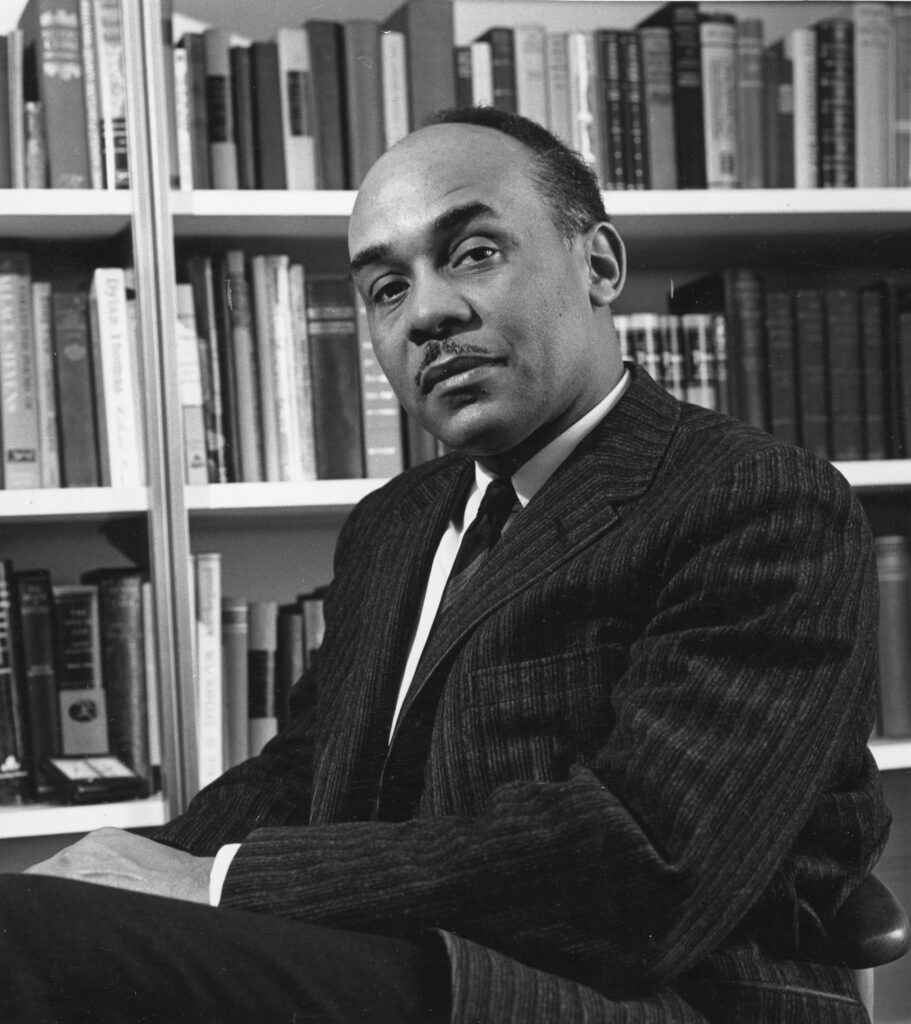
The trust that controlled Ralph Ellison’s literary estate has given all of it to Bard College: the rights, the royalties and the future of Invisible Man. Bard, where Ellison taught from 1958 to 1961, has built a new Ralph Ellison Center around the gift and plans to put his archive online.
“We gave them everything,” Donn Zaretsky, the lawyer for the Ralph and Fanny Ellison Charitable Trust, told The New York Times. The trust’s net assets are about $3.6 million, the Times reported, including literary copyrights valued at more than $600,000. Most of the royalties it collected over the years came from Invisible Man, the 1952 novel about a Black man the country refuses to see.
For Black readers, the question is who holds a Black writer’s work after he is gone. Ellison died in 1994. Zaretsky said the transfer fit values his widow, Fanny Ellison, held about education. The copyrights and the money now sit with a school, not with a publisher’s ledger or private heirs.
What the center will do
Nicholas Lewis, a Bard associate dean, directs the center. He said it will “inspire artists and intellectuals to explore and address the substantive issues of our time through the same philosophy that drove Ellison to operate as one of the canonical American cultural figures of the twentieth century.”
The programs reach past Bard’s campus in Annandale-on-Hudson, New York. Lectures will be held at Bard and at partner historically Black colleges. Students from Bard and those partner HBCUs will be eligible for paid internships in archival work. The Amsterdam News reported that a yearlong commemoration of Invisible Man will mark its 75th anniversary in 2027.
Ellison’s papers are held at the Library of Congress in Washington. The center will lead a digitization project with students, faculty and scholars, and Bard plans to make the digital materials public.
Zaretsky said Bard made sense because Ellison “had a genuine history there” and because the college understood the full breadth of his interests. Ellison was also a musician, a sculptor and a poet, and the center is meant to cover all of it.
Lewis described the response to the announcement as “a little overwhelming, in a delightful way.”
Have your say