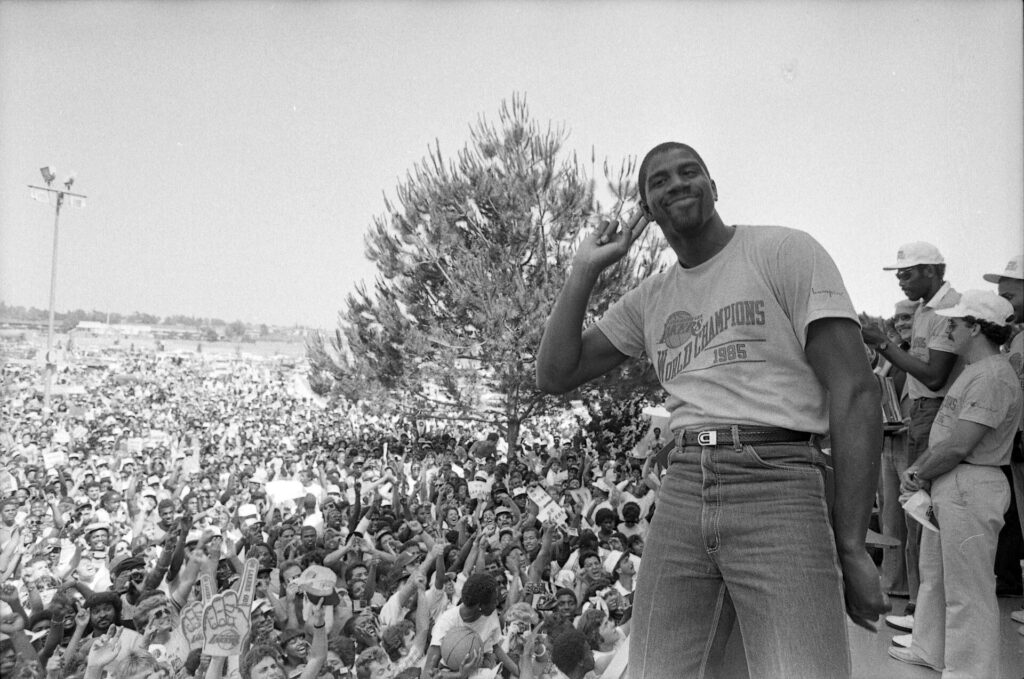
On Nov. 7, 1991, Magic Johnson stood at a podium in Inglewood, California, and told the country he had HIV. He was 32, a five-time NBA champion, and he was retiring that day. Thirty-five years later, the newest federal count shows the virus still lands hardest on the people he looked like: Black Americans made up 39% of new diagnoses in 2024 while being 12% of the population, according to the CDC.
That is 15,128 people in one year. The diagnosis rate for Black Americans was 42.2 per 100,000, against 13.3 for the country as a whole.
The gap is widest for women. Black women had a diagnosis rate of 21.6 per 100,000, which the CDC says is 12 times the rate for white women (1.8). They are 13% of women in the United States and 52% of all women diagnosed.
Johnson did not announce it alone. NBA Commissioner David Stern, Lakers owner Jerry Buss and his former teammate Kareem Abdul-Jabbar stood with him, and his wife Cookie, two months into their marriage and pregnant with their son E.J., was beside him. He refused to treat the news as an ending. “I plan on going on, living for a long time,” he said. “Bugging you guys like I always have. So you’ll see me around.”
He kept that promise, and he turned the day into a cause. Nov. 7 is now observed as Point Forward Day, named for his positions with the Lakers, to educate people about HIV. His announcement also broke a belief that the virus was a disease of other people. It put a heterosexual Black athlete in front of a country that had mostly seen HIV as something that happened to gay men.
What has not moved fast enough is who carries the weight. A man can live for decades with HIV when he has care, and Johnson, with the best doctors available to him, has shown it. The figures say that care, testing and prevention have not reached Black communities in proportion to how hard the virus hits them. A rate more than three times the national average is not an accident of biology. It is a measure of who the health system has served and who it has left to find its own way.
The CDC publishes its HIV surveillance report each year. The next one will show whether 2025 closed any of this gap, and the number for Black women is the one to watch.
Have your say