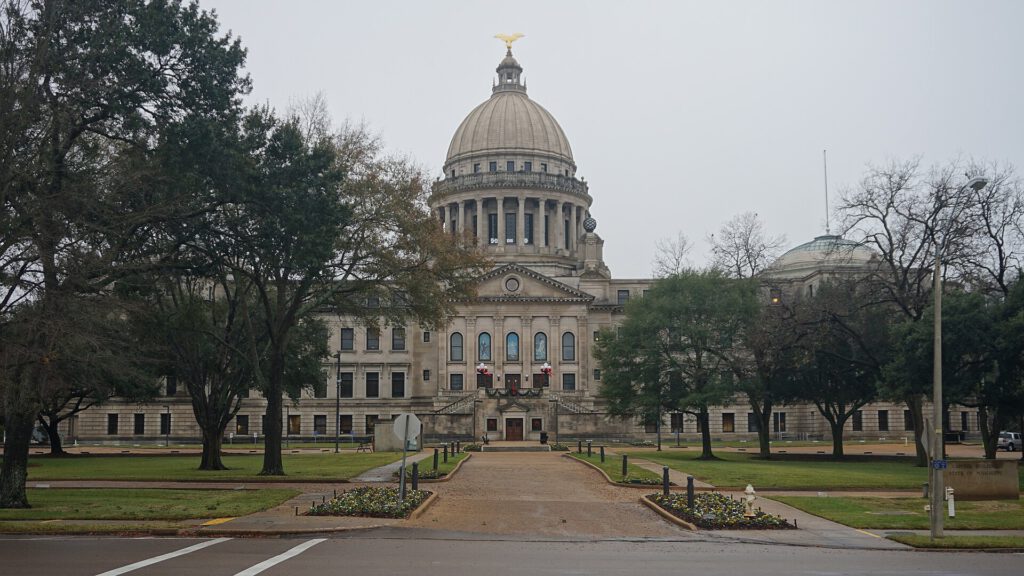
Between 2022 and 2024, police in Lexington, Mississippi, made one arrest for every four residents, more than 10 times the state’s per-capita arrest rate. The city court issued warrants for more than 650 people over unpaid fines, roughly half the town’s population. On Oct. 16, Lexington settled with the Justice Department. Six days later, a new federal lawsuit landed.
The Justice Department’s 2024 investigation found that the Lexington Police Department targeted Black residents for arrest, used excessive force, retaliated against people who criticized or recorded officers, and jailed people who could not pay fines. Lexington is a rural, majority-Black city about 65 miles north of Jackson.
The three-year agreement bars the city from jailing anyone over unpaid fines without first assessing their ability to pay. It requires dismissal of the unlawful fine-based warrants and expungement of related convictions, bans arrest quotas and revenue incentives, and orders DOJ-approved training on stops, searches, arrests and use of force. It can end early or be extended, depending on whether the parties agree the city has complied.
U.S. Attorney J.E. Baxter Kruger said the reforms aim “not only to address the concerns identified in our investigation, but also to strengthen public trust and promote practices that respect the rights and dignity of every person.”
On Thursday, the Southern Poverty Law Center and the ACLU of Mississippi sued over what happened to resident Terrance Gypson, as TheGrio first reported. The suit says a Lexington officer violated his constitutional rights when he recorded police activity in May 2024. Retaliation against people who film officers was one of the practices the Justice Department described. Separate federal lawsuits by residents over the department’s conduct have already been settled, the ACLU of Mississippi announced.
The ballot is changing too
Policing is one of two fronts in Mississippi where Black residents are watching the law shift. The other is the ballot.
In April, the U.S. Supreme Court’s decision in Louisiana v. Callais largely neutralized Section 2 of the Voting Rights Act, the provision courts used to strike down maps that dilute Black voting power. Mississippi is 38% Black, the highest share of any state, and has one majority-Black congressional district, the 2nd, held by Rep. Bennie Thompson, the state’s only Democrat in Congress.
In May, after the 5th U.S. Circuit Court of Appeals overturned a ruling that Mississippi’s Supreme Court districts violated the Voting Rights Act, Gov. Tate Reeves canceled a planned special session on those districts. He said the state would redraw its congressional map later, and that Thompson’s tenure in the 2nd District is over. “It is not a question of if, it’s a question of when,” he said, according to Democracy Docket. Mississippi has already held its 2026 congressional primaries, so a new map would apply in 2027 or later.
The state House and Senate maps the Legislature redrew in 2025 to add Black-majority districts, after a court found the old ones violated the Voting Rights Act, are also exposed if lawmakers revisit them.
The Lexington agreement is now in force for three years. The city’s first test is whether the unlawful warrants are dismissed.


Have your say