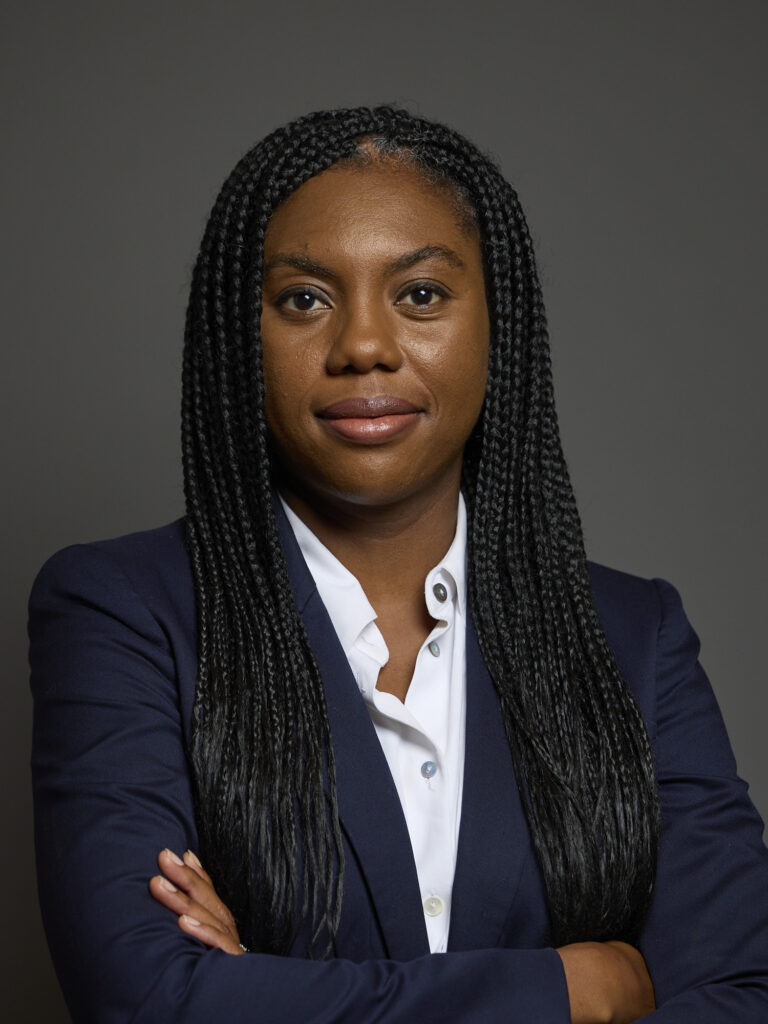
Kemi Badenoch, the first Black woman to lead a major British political party, says Britain’s taxpayers owe nothing for slavery. This week she is saying it as loudly as she can, while Caribbean leaders sit down in Antigua to ask Britain for an apology and for money.
The Conservative leader answered Prime Minister Andy Burnham after he wrote in The Guardian that he felt “sorrow and regret” for the transatlantic slave trade and was “open” to calls for a formal apology, while ruling out reparations. Badenoch called the whole conversation “another navel-gazing distraction. The Commonwealth should be looking forward, not endlessly backwards.” She added: “If every Commonwealth summit becomes an exercise in presenting Britain with demands for cash then we need to start asking if it is worth the effort.”
Her argument on money is one she has made before: “there is no reason British taxpayers today should be held financially responsible for things that happened generations before any of us were born.” She also pointed to Tony Blair, who expressed Britain’s “deep sorrow” in 2006, as proof that Britain has already said what it needs to say.
The people on the other side of that argument are the descendants of the enslaved. The Caribbean states meeting in Antigua want a formal apology, debt relief and investment in health and education. In March, 123 countries at the United Nations General Assembly backed a resolution calling the trade in enslaved Africans the gravest crime against humanity and supporting reparations. Three voted no: Argentina, Israel and the United States. Fifty-two abstained, Britain among them. Badenoch said Britain should have voted no, too. “Britain led the fight to end slavery,” she wrote at the time. “We shouldn’t be paying for a crime we helped eradicate and still fight today.”
It is true that Britain abolished slavery in its empire. How it did so is the part that argument leaves out. The 1833 Slavery Abolition Act set aside £20 million to compensate enslavers for the loss of the people they held. The people themselves received nothing, and were bound to their former enslavers for years of unpaid “apprenticeship.” Britain’s Treasury has said the loan raised to pay the enslavers was not fully repaid until 2015, which means British taxpayers, Black ones among them, have already paid for slavery. They paid the enslavers.
That is the answer to the taxpayer argument, and it is a matter of record. No one in Antigua is asking Britain to punish the living for the dead. They are asking it to reckon with a payment it has already made, to the wrong side.
Badenoch’s position carries weight because of who she is. She is the daughter of Nigerian parents, and her words will be quoted in Lagos, Kingston and Toronto as the view of a Black British leader. Black communities hold no single opinion on reparations, and she is entitled to hers. But a Black face on the argument does not change what the record shows, or what 123 governments concluded.
Burnham’s own position falls short as well: an apology without compensation asks the Caribbean to accept words from the country that was paid. The Commonwealth summit in Antigua runs through Wednesday.
Have your say