The federal law that makes agencies stop and look before a highway or pipeline runs over a historic place was passed because highways had already run over Black neighborhoods. On Monday the Senate is expected to hold a procedural vote on a permitting bill that would narrow it.
After World War II, urban renewal and highway construction destroyed landmarks and devastated historically Black neighborhoods, NPR has reported. Congress answered in 1966 with the National Historic Preservation Act. Its Section 106 requires federal agencies to weigh how a project they fund, carry out or permit will affect historic places, and to seek ways to avoid or reduce the harm.
Two separate changes now aim at that review.
The first is Senate Bill 5653, the Bipartisan American Affordability and Jobs Act of 2026, sponsored by Sens. Martin Heinrich, a New Mexico Democrat, and Shelley Moore Capito, a West Virginia Republican, among others. It would rewrite the Section 106 statute, curtail consultation with state and tribal preservation offices, set rigid deadlines, limit tribes’ ability to seek judicial review and narrow what counts as harm to a historic site. A Congressional Research Service report says it would not require any public involvement in the review. Heinrich says the bill would “codify Tribal consultation in statute, maintaining key environmental protections, and forcing AI data centers to fully pay for their grid upgrades.” The sponsors’ aim is to speed energy projects.
The second is a rule. The Advisory Council on Historic Preservation, 20 of whose 24 members are Trump appointees, voted in July to advance revisions that would make public comment optional, drop the requirement to consult tribes and narrow what counts as an adverse effect. Sara Bronin, who chaired the council under President Joe Biden, warned that state highway widening could then proceed without Section 106 review, potentially destroying burial sites and neighborhoods. The rule still faces a 30-day public comment period.
The reporting on both changes has centered on tribal nations, whose ancestral lands in places like Ohio are at stake. Black communities have their own record under this law. Section 106 review is how the Federal Railroad Administration reopened its look at the Shockoe Hill African Burying Ground in Richmond, Virginia, believed to be the final resting place of 22,000 Black people, and concluded that a rail project as planned would harm it. It is also the process through which New York’s African Burial Ground became a national monument.
The review is slow and imperfect, and it often fails. But it is one of the few places where a Black congregation or a family with an unmarked family cemetery can make an agency answer in writing. Once public comment is optional and the definition of harm shrinks, the people who were flattened the first time are the ones with the least power to object.
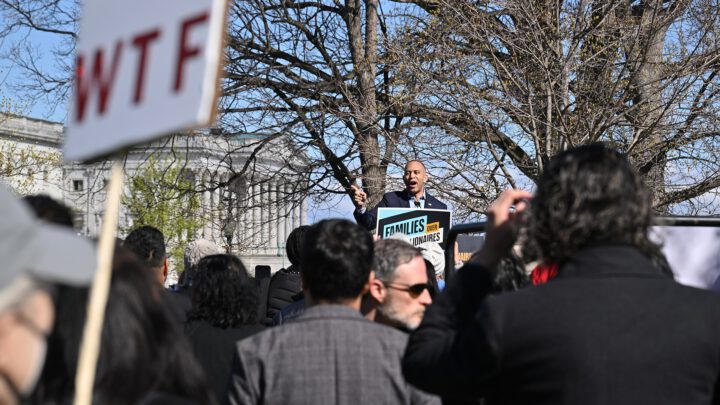
The sponsors say the country needs faster permits. Nothing in the bill requires that speed to come from communities that have lost land to federal projects before. Senators who vote for it Monday will be voting on whether the 1966 safeguard survives intact, and preservation groups are planning a rally at the Capitol the same day.
Have your say