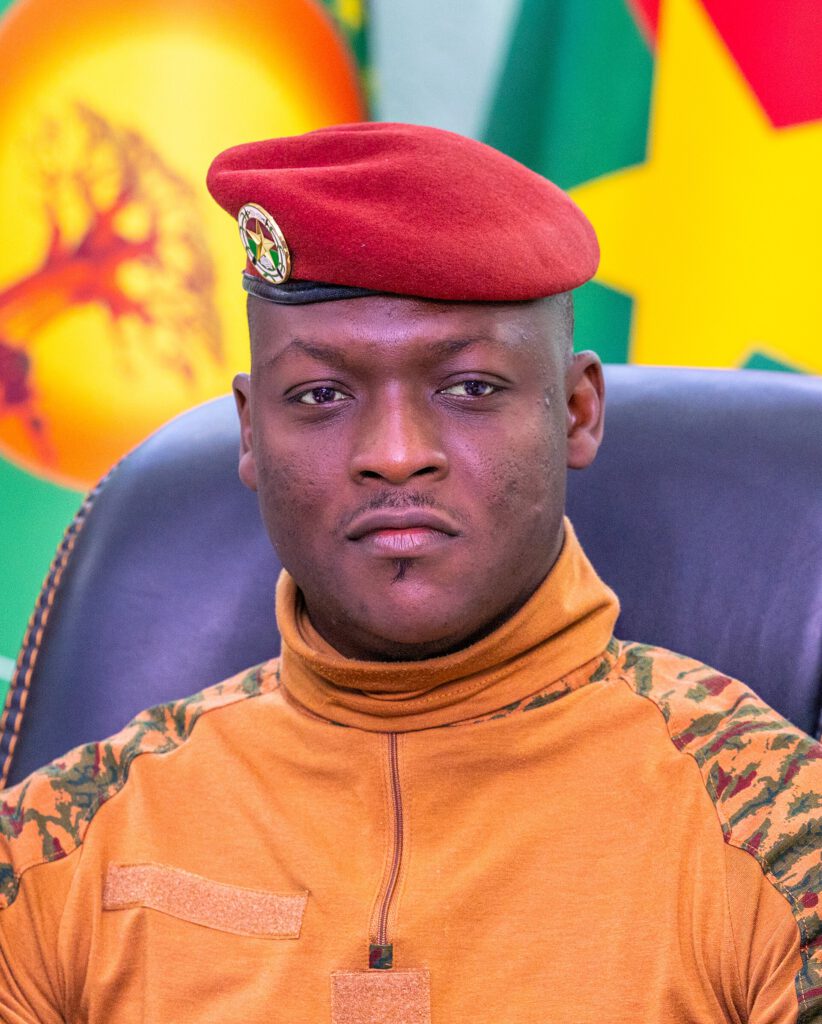
Burkina Faso’s military government cut diplomatic relations with France on June 26, 2026, in a statement read on national television. France pulled out its diplomats within days. Yet Burkina Faso still uses the CFA franc, and trade between the two countries, put at US$342.6 million for 2025 by the analysis site Sahel Watch, did not stop with the announcement.
For Black readers on both sides of the Atlantic, the break is the latest chapter in a long argument over who decides the fate of a Black African state. Burkina Faso was a French colony until 1960. Its government now says the old relationship never fully ended. Its critics say the government is using that history to justify its own hold on power.
What was announced, and what was not
Government spokesman Pingdwendé Gilbert Ouédraogo said the government “has decided to sever diplomatic relations with France with effect from today, June 26, 2026,” as reported by France 24. The government accused Paris of “neo-colonial ambitions, made evident by its active support for subversive networks and the terrorists who are plunging our country and the Sahel into mourning,” in the words carried by Al Jazeera.
That is an accusation, not an established fact. The reports we reviewed offer no evidence for the claim that France backs armed groups, and France rejects it. The Quai d’Orsay, the French foreign ministry, called the decision hostile and baseless, said reciprocal measures were under consideration, and told French nationals in Burkina Faso to be vigilant. All French diplomats were back in France by the end of that week, TRT Afrika reported, and Burkinabè diplomatic staff in Paris were given until the evening of Monday, July 6 to leave.
Ouagadougou also drew a boundary around the move. It concerns “exclusively the institutional framework of relations between the two states at the diplomatic level,” the statement said, and leaves intact the “historical, human, cultural and social ties” between peoples. It promised to protect French nationals in the country. International relations expert Hamadé Soro told Africanews that “it is the state-to-state and institutional relations between the two countries that are affected by the break,” and that such a rupture is not irreversible. No restoration of ties has been announced.
How the relationship unraveled
The break did not come out of nowhere. In January 2023, months after Captain Ibrahim Traoré’s September 2022 coup, Burkina Faso demanded that French troops leave. About 400 special forces were based there in a deployment called Sabre. A flag-lowering ceremony outside Ouagadougou ended French military operations that February. Days before the demand, the prime minister had called Russia a “reasonable” choice of partner against the jihadists. France had already ended its Barkhane mission in neighboring Mali in 2022.
Other steps followed. Burkina Faso suspended French news outlets and, in April 2024, expelled three French diplomats over alleged subversive activities, Euronews reported. In January 2025, Burkina Faso, Mali and Niger left the Economic Community of West African States (ECOWAS), having formed their own bloc, the Alliance of Sahel States. Traoré holds its rotating presidency in 2026. Thousands rallied in Burkina Faso and Niger to cheer the exit, Channels TV reported.
The three governments are run by officers who took power by force. Burkina Faso’s dissolved political parties in January 2026 and seized their assets, according to Al Jazeera. Human Rights Watch alleged in April 2026 that the military committed atrocities against Fulani civilians; the reporting we reviewed does not show the government’s answer. Any reading of the rupture as pure liberation has to account for those facts.
The case for sovereignty
Many Africans see the break as overdue. The Tricontinental Institute, a research group that backs the Sahel governments’ direction, argues that “flag independence was achieved with no real economic transformation” and that French influence continued through “cooperation” agreements: defense pacts, a shared currency, resource contracts. It points to Mali’s new mining code, which requires 30% state participation, as an example of what leaving that system can look like.
The CFA franc is the sharpest test of that argument. It remains Burkina Faso’s currency, and the diplomatic break changes nothing about it. The government has not said how it would leave the arrangement it says binds it.
What ordinary Burkinabè face
The security picture weighs most. Burkina Faso has endured a decade of violence by groups linked to Al-Qaeda and the Islamic State, among them JNIM and ISSP, in its north, south and west. French troops did not end it, and the turn to Russia has not ended it either. Civilians in those regions have little say in either partnership.
Burkinabè students, workers and families with ties to France now face a gap in consular and visa services, though the reports we reviewed give no figures on how many people are affected.
The next test is France’s reciprocal measures, which Paris has said it is still weighing.
Have your say