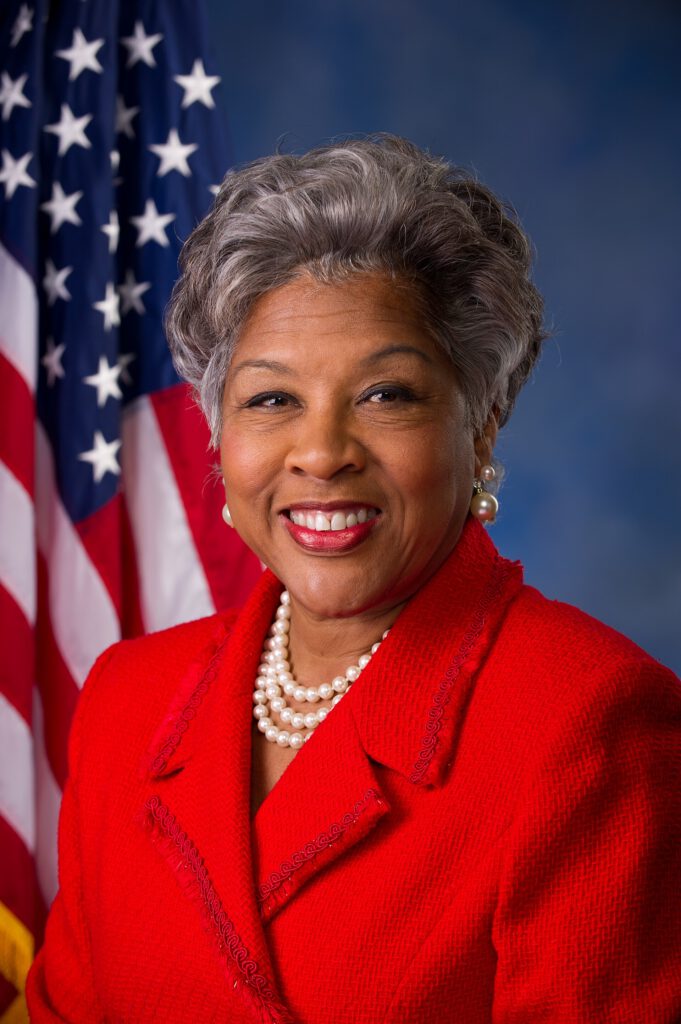
When the Kennedy Center board added Donald Trump’s name to the building last December, the White House called the vote unanimous. Rep. Joyce Beatty, an Ohio Democrat who sits on that board by virtue of her office, said she had been muted on the call and never got to say no. She sued instead. Eleven months later she is still the one standing between the president and the building.
Beatty is a Black congresswoman from Columbus and a former chair of the Congressional Black Caucus. She is not a celebrity plaintiff or a hired litigator. She is a board member who decided a vote taken over her objection did not bind her, and who took the president to court on a law Congress passed in 1964, when it named the center for John F. Kennedy.
She has won so far. In May, U.S. District Judge Christopher Cooper ordered Trump’s name off the exterior, and the D.C. Circuit refused in July to put that order on hold while the administration appeals. Cooper also blocked the board’s plan to shut the center for two years of renovation, calling the vote “ill-informed and seemingly preordained.”
On Thursday the Justice Department asked him to lift that second order. Attorney William Jankowski said the board’s decisions “were reasonable, and they must stand,” and that the court should give them “very, very deferential” review. The administration says the building is “dangerously dilapidated” and points to a partial ceiling collapse in September.
Beatty’s lawyer, Nathaniel Zelinsky, said lifting the injunction would “embolden future breaches and misbehavior.” He asked the judge to appoint an independent monitor. Beatty’s side says the roughly $257 million Congress appropriated for repairs can be spent in phases over four years while the doors stay open. The board has voted twice, between August and September, for a full two-year closure.
Beatty argues the closure is leverage. “The president is holding those dollars hostage because he is saying unless his name goes back up on the building,” she has said, he will not move the money forward. The administration has not said that. What is on the record is the sequence: a name nobody in Congress approved, a court that took it down, and then a plan to empty the building.
Cooper did not rule from the bench. Kennedy relatives, including JFK’s great-niece Bridget Kennedy-Bailey, have filed declarations backing Beatty’s case.
The fight is about more than a plaque. A federal arts institution belongs to the public by statute, and a board stacked by one man cannot rewrite that statute with a vote. Beatty is right to keep fighting, and the judge should keep the building open while she does. His ruling will decide whether the center is repaired or closed for two years.
Have your say