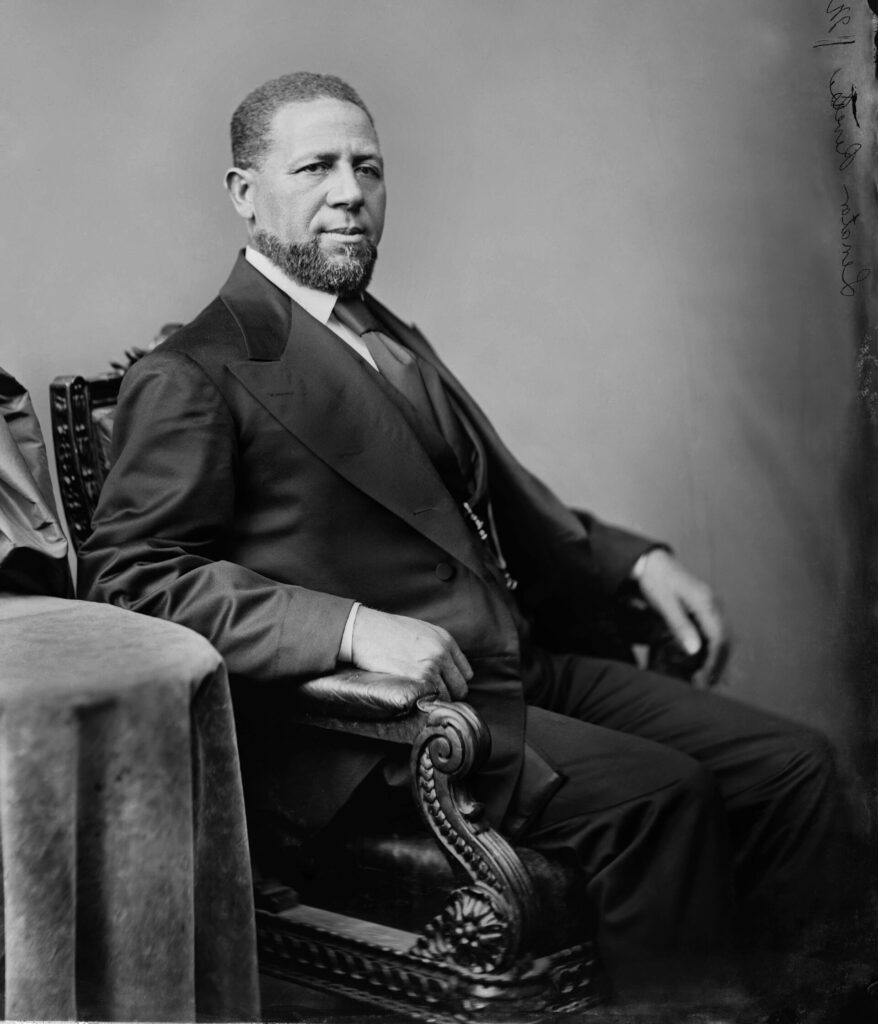
On Feb. 25, 1870, the U.S. Senate voted 48 to 8 to seat Hiram Revels, the first Black member of Congress. The eight senators who voted no argued that he could not hold the seat because he had not been a citizen for nine years.
Their proof was the Supreme Court’s 1857 Dred Scott decision, which said Black people were not citizens. The 14th Amendment had been ratified only in 1868. Revels’s supporters answered that the Civil War and the Reconstruction amendments had overturned Dred Scott, and the vote split along party lines. Revels took the seat that Jefferson Davis had left to lead the Confederacy.
Mississippi sends its next Black senator to Washington in January. Scott Colom, a Democrat, won this month’s election and will be the state’s first Black senator since Reconstruction ended in 1881. For Black Mississippians, that is a 145-year wait for someone in the Senate who looks like them.
Historian Eric Foner profiled Revels in The Nation this week. Revels was born free in Fayetteville, North Carolina, in 1827, and was ordained in the African Methodist Episcopal Church in 1845. He worked as an itinerant missionary, founded schools for freed people during the Civil War and helped organize Black Union soldiers. He moved to Mississippi in 1864.
He served about one year. In that time, Foner writes, he pushed for desegregated schools in Washington, D.C., opposed discrimination on transportation and won jobs for Black mechanics at the Baltimore Navy Yard. Foner calls him “more of a churchman and an educator than a politician.”
Revels did not receive his seat as a gift. The Senate had to vote on whether a Black man could be a citizen, on the strength of the worst ruling in the Court’s history, and 48 senators said yes. Black voters in Mississippi have now done what that vote started, and the Senate should say so plainly when it seats Colom.
Colom is sworn in when the new Congress convenes in January.


Have your say