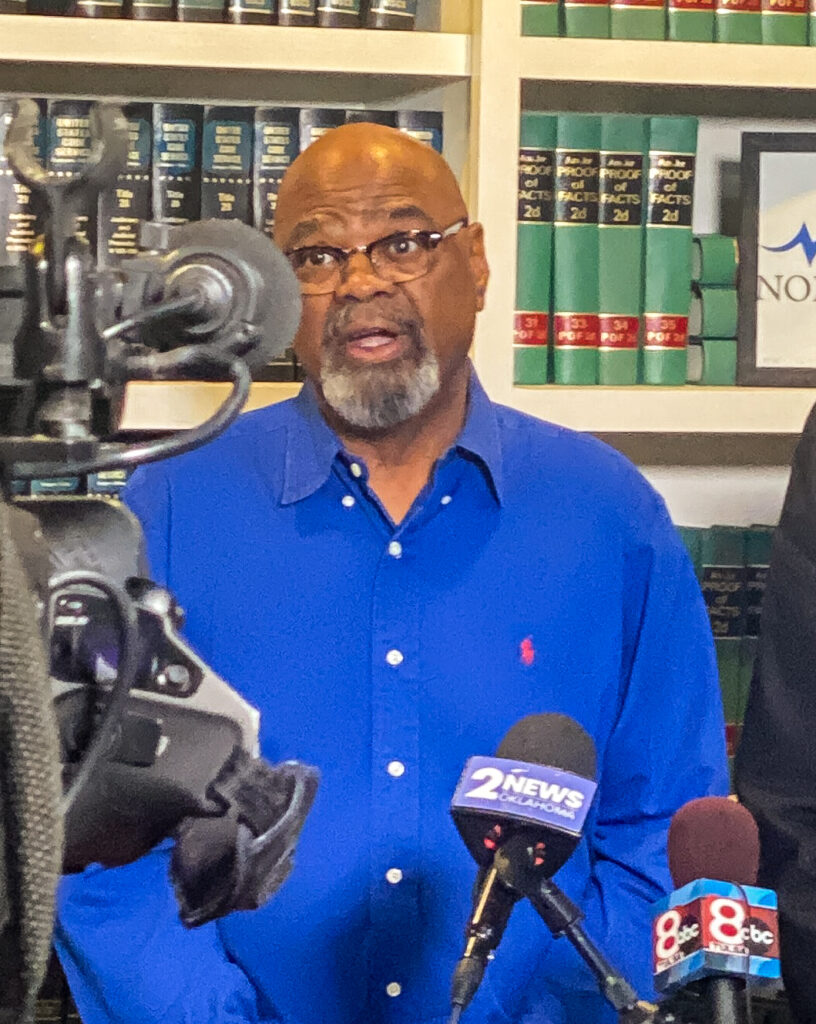
Glynn Simmons, who spent 48 years in an Oklahoma prison for a murder he did not commit, died Wednesday, Oct. 28, at 73. He had been fighting colon cancer. He was the longest-imprisoned person ever exonerated in the United States, according to the National Registry of Exonerations, and he had about three years of freedom.
Simmons, who was Black, was sentenced to death in 1975 for the killing of Carolyn Sue Rogers during a liquor store robbery in Edmond, outside Oklahoma City, on Dec. 30, 1974. The sentence was later reduced to life. He said from the start that he was in Louisiana when it happened.
He walked out in July 2023, after prosecutors acknowledged that evidence had never been given to his defense, including a police report suggesting eyewitnesses may have identified other suspects. That December, Oklahoma County District Judge Amy Palumbo ruled that “the offense for which Mr. Simmons was convicted… was not committed by Mr. Simmons.” Oklahoma County District Attorney Vicki Behenna, who declined to retry him, had initially opposed the innocence declaration.
His case is not an outlier. Black people are about 13.6% of the U.S. population but 53% of the people on the registry’s list of exonerees, according to its 2022 report on race and wrongful convictions. The same report found that an innocent Black person is about seven and a half times more likely than an innocent white person to be convicted of murder.
Simmons was diagnosed with stage 4 cancer around the time he was released. In 2024, the Edmond City Council approved a $7.15 million settlement of his federal civil rights lawsuit. When the judge cleared him in 2023, state law made him eligible for up to $175,000 in compensation, and his attorney, Joseph Norwood, said then that any payment was uncertain and years away. For a time he relied on crowdfunding.
He stayed in Oklahoma after his release. His family said in a statement that he “wanted to build a legacy here, and he never forgot the many Oklahomans who showed him kindness,” and that he “never let bitterness have the last word.”
“He didn’t give up,” Norwood said. “He fought.”
Have your say