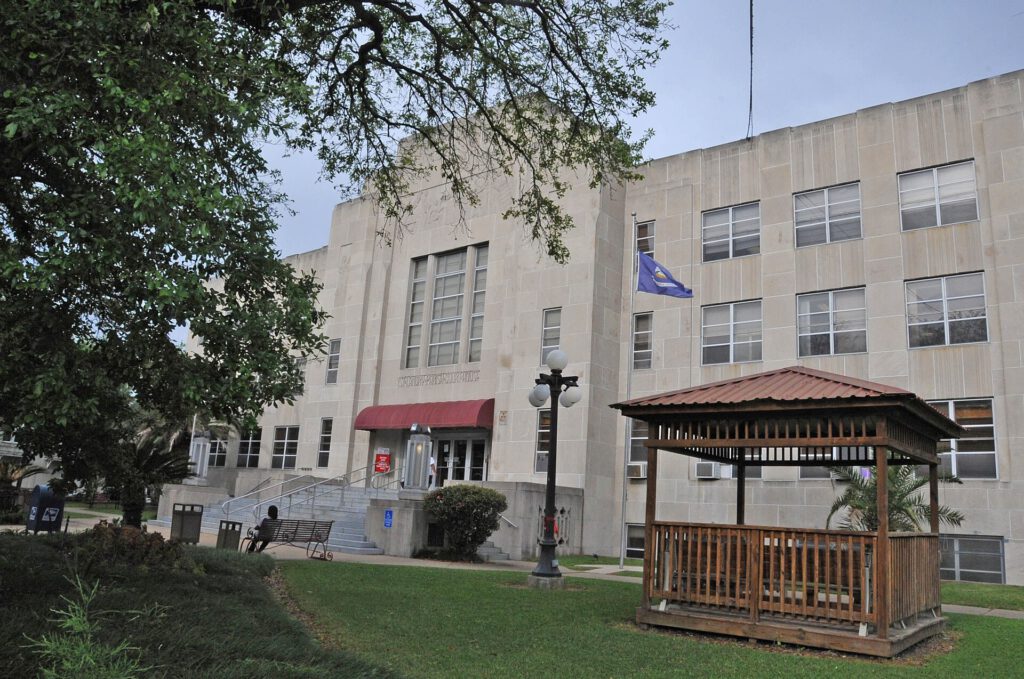
When Patrick Guillory drives past the St. Landry Parish courthouse in Opelousas, Louisiana, he sees the oaks draped in Spanish moss and pictures the white men who threatened to hang his grandfather from one of them. His grandfather’s offense was trying to register Black voters. Thomas Guillory is 95 now. The majority-Black congressional district that includes the parish, now represented by Rep. Cleo Fields, has been invalidated.
The U.S. Supreme Court’s 6-3 decision in Louisiana v. Callais on April 29 held that Louisiana engaged in an “unconstitutional racial gerrymander” when it drew a second majority-Black district to comply with Section 2 of the Voting Rights Act. The Court ruled that Section 2 is violated “only when the evidence supports a strong inference that the State intentionally drew its districts to afford minority voters less opportunity because of their race.” That is a far higher bar than the one voting-rights lawyers had worked under for decades.
Capital B, which reported from St. Landry Parish, counts at least three majority-Black districts across the South dismantled since the ruling, and says analysts expect half a dozen or more Black elected officials could lose their seats in November.
Opelousas is about 75% Black. Capital B reports the median household income is roughly $33,000, about half the Louisiana median, and 40% of residents live in poverty. Those are the numbers behind a question people in the parish are now asking out loud: what did representation deliver?
Guillory, 41, an organizer who also runs the Southwest Zydeco Music Festival, hears it from neighbors. “From the outside, it happened and then they moved on,” he told Capital B. “But here on the inside, we still have people that are fighting.”
The parish has few reasons to take the vote for granted. Capital B recounts that in the 1940s and 1950s white mobs attacked Black people who tried to register in Opelousas, and that no Black person voted in the city for more than a decade. In 1868, more than 200 Black people were killed in the area for organizing to vote and to educate themselves.
Residents do not agree on the answer. Rod Sias, the local NAACP chapter president and a mayoral candidate, talks about “protective institutions” and the unglamorous needs, like roof repairs and appliances, that elected officials can address. “We need unity and not unification,” he said. Elbert Guillory, 82, a Republican mayoral candidate who switched parties in 2013, argues that Black self-reliance has been “sacrificed in exchange for allegiance to our overseers.” Cassandra Douresseaux, 54, a former school employee, dislikes what she calls race wars, but says “you still have to pay attention to it because you got all these people that actually need help.”
The disagreement sits alongside a drop in party registration. Capital B’s analysis found about 40,000 fewer Black Louisianans registered as Democrats than in 2016, with the sharpest decline in Acadiana, the region that includes St. Landry.
Have your say