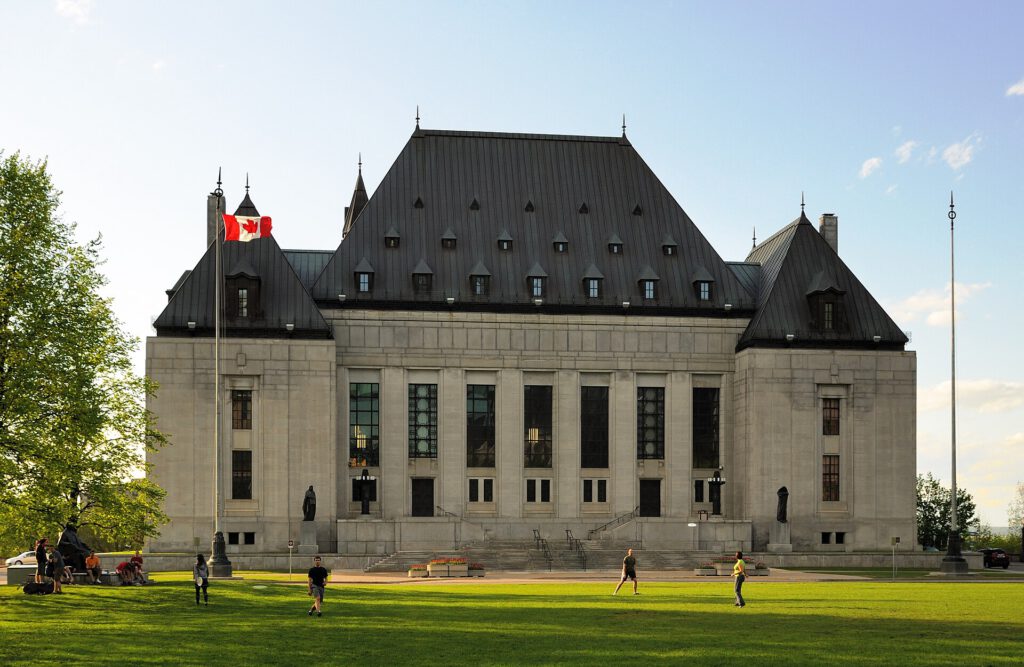
The Supreme Court of Canada on Friday largely upheld Quebec’s Bill 21, the law that bars teachers, police officers and other public servants from wearing religious symbols at work. Six of seven justices said it stands because Quebec validly used the Charter’s notwithstanding clause when it passed the law in 2019. The court did not set new limits on that clause, rejecting proposals from the federal government and from the groups that brought the challenge.
That is the part that reaches Black Canadians. Section 15 of the Charter, the equality guarantee that protects people from discrimination on grounds including race, is one of the rights a legislature can switch off by invoking the clause. The challengers argued that Bill 21 violates women’s equality and falls hardest on Muslim women. The courts below rejected that, and so did the Supreme Court. At the hearing, the Canadian Civil Liberties Association (CCLA) urged the justices to look at the combined discrimination racialized Muslim women face because of race, religion and gender. A law shielded by the clause does not have to answer that argument.
The court struck down one piece: the provision that banned members of Quebec’s legislature from wearing religious symbols. Everyone else covered by the law, from classroom teachers to police officers, remains covered.
Chief Justice Richard Wagner stated that “Bill 21 is rooted in Quebec’s legitimate and historical commitment to ensuring the [secularism] of the state,” according to the Globe and Mail. The justices split 4-3 on some of the other questions, including whether the court should issue its own declaration that the law violates Charter rights.
Quebec Premier Paul St-Pierre Plamondon called the clause “an essential, democratically accepted tool for legislators.” The CCLA called the law an “egregious rights violation (that) unfairly targets people who express their faith through what they wear.”
Natasha Bakht, a University of Ottawa law professor, said the ruling could be “one of the most significant rulings on rights and freedoms in recent years” with consequences “beyond Quebec, particularly for how the notwithstanding clause can be used across Canada.” Quebec, Ontario, Saskatchewan and Alberta have each invoked the clause since Bill 21 passed, Global News reported.
The National Council of Canadian Muslims says 73% of Muslim women in Quebec have considered leaving the province. The court has now said a government can decide in advance that a right will not apply to a law, and it will not police how often that is done. Any province that wants to test that on its next law has just been told the door is open.

Have your say