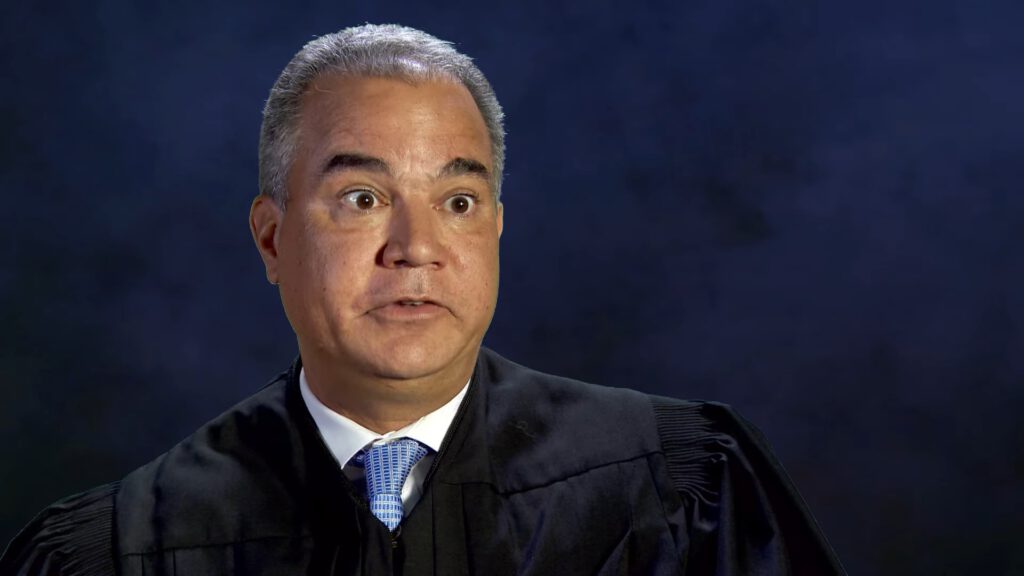
A federal judge in Washington has blocked President Donald Trump’s second attempt to decide which American-born children count as citizens, and he did it by leaning on a sentence written to make sure Black Americans could never again be told they did not belong.
U.S. District Judge Christopher Cooper issued a 67-page opinion on Wednesday in Nathan v. Trump. It grants a classwide preliminary injunction, which stops the State Department, the Department of Homeland Security and the Social Security Administration from enforcing the president’s Aug. 6 order against the children it covers while the case continues. Cooper also refused the administration’s request to pause his ruling while it appeals.
“The President cannot carve out new exceptions to birthright citizenship for children born within the United States and subject to its laws,” Cooper wrote.
The order tried to withhold recognition of citizenship from babies born to foreign government employees without diplomatic immunity, to parents using commercial surrogacy, and to parents tied to so-called birth tourism. It also reached children of an “alien enemy,” a term it stretched to cover members of designated terrorist groups. Cooper rejected that last category directly: “a parent’s purported status as an alien enemy, standing alone, cannot strip a U.S.-born child of his right to birthright citizenship.”
Why this belongs in a Black paper is written into the Constitution. The Citizenship Clause of the 14th Amendment, ratified in 1868, exists because the Supreme Court held in Dred Scott in 1857 that Black people, enslaved or free, could never be citizens. Congress answered by making birth on American soil the test, in plain words, so no president or court could reopen the question for a whole people. Cooper’s ruling rests on that clause and on United States v. Wong Kim Ark, the 1898 decision that applied it to a child born to Chinese parents, along with the Supreme Court’s decision this year striking down Trump’s first order.
Every exception a president invents is a precedent. A rule that lets the government sort children by what their parents are suspected of, or by who their parents work for, is a rule about whose birth counts. Black Americans know where that logic leads, and so do the Black immigrant families, Caribbean, African and Afro-Latino, whose U.S.-born children are protected by the same sentence.
A Maryland judge had already partially blocked the order on Sept. 2. The White House called Cooper an activist judge and is expected to ask the D.C. Circuit, and possibly the Supreme Court, for emergency relief.
That request is the next thing to watch. The justices settled this question once this year. The administration is asking them to settle it a second time, and the right answer is the same one: birth here makes you a citizen, with no exceptions the president gets to write.
Have your say