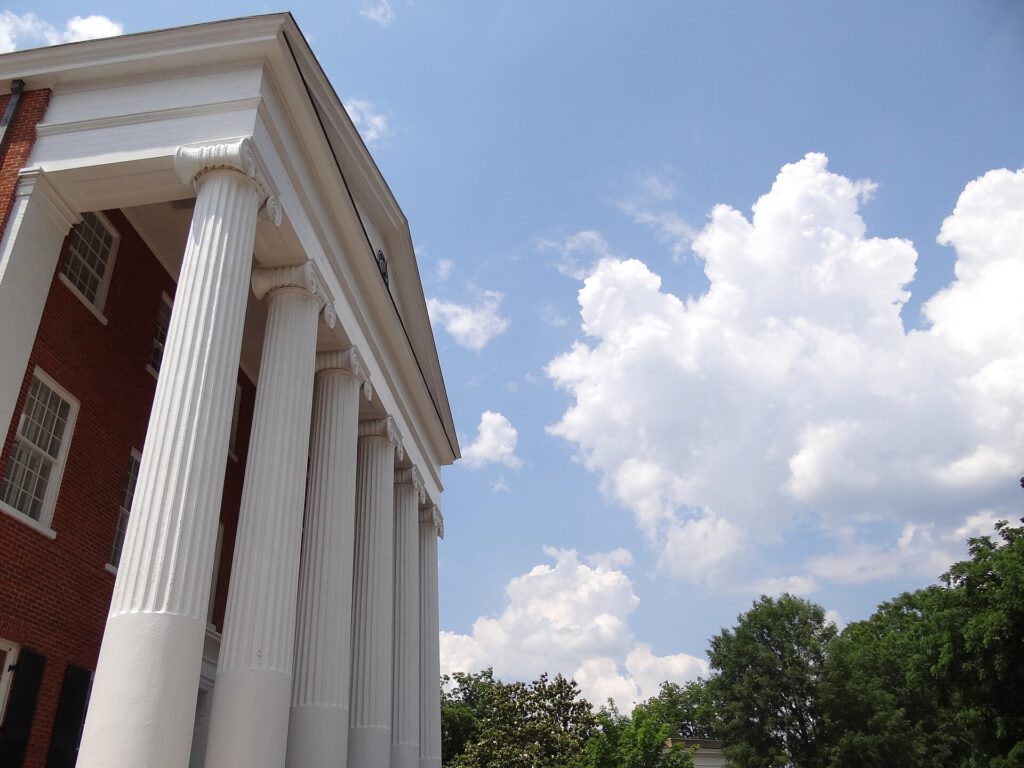
A Ring camera outside an off-campus apartment at the University of Mississippi recorded three white women walking past the door. Two of them made monkey noises. One hopped into view and beat her chest. The three Black students who live inside, Jakiyra Metcalf, Kaiyden Caldwell and Victoria Johnson, were the ones who recorded it, as Blavity reported.
The video spread across social media and the university answered on Sunday. “The university is aware of a video depicting offensive, hurtful, and unacceptable behaviors that conflict with our university values and we condemn them,” it said. The incident, it added, is “actively being investigated,” though student conduct records are protected under the federal privacy law known as FERPA. Vice Chancellor Shawnboda Mead called the behavior “deeply troubling, hurtful, and unacceptable.” What discipline the three women face is not public.
One of them, an 18-year-old freshman, has since apologized and withdrawn from the university after receiving death threats, Blavity reported. The university has not said her departure was a punishment. She said she did not know the residents’ race. “My actions were insensitive, inappropriate, and deeply harmful,” she said. We are not naming her: she has not been charged with anything, and threats against anyone are wrong.
The apology does not change what the sounds are. Comparing Black people to apes is one of the oldest racist taunts in the country, and at Ole Miss it lands on ground with a history. The university had to be forced to admit its first Black student, James Meredith, in 1962.
Nor is this the first time. In May 2024 a video showed an Ole Miss student making ape-like noises at a Black woman at a protest. His fraternity expelled him. A Republican congressman reposted the clip with the caption “Ole Miss taking care of business,” then walked the praise back three days later.
The Black students’ families have been more generous than the school has been clear. One mother said: “I hate that she withdrew from school…because the course of her life, that’s going to affect her too.” Her daughters did nothing to invite this. They came home to their own front door and found it was a stage.
That generosity does not excuse a slow answer. Black students at a flagship university in Mississippi should not have to wait on a confidential process to learn whether harassing them has a consequence. Ole Miss can respect privacy law and still tell the three residents, and every Black student on campus, what the process is and when it ends. The investigation is ongoing, and no outcome has been announced.


Have your say